Western Australia Recreational Fishing Rules and Licensing Guide
How licensing works in Western Australia
Western Australia takes a different approach to most other states. Instead of one general licence covering all recreational fishing, WA uses a set of activity-specific licences issued by the Department of Primary Industries and Regional Development (DPIRD). If your chosen activity is not on the licence list, you may generally fish without a licence, provided you follow every bag limit, size limit, gear rule and closure that applies to the water you are fishing.
The licences most commonly required are the Recreational Fishing from Boat Licence (RFBL), and separate licences for rock lobster, abalone, marron, freshwater angling in the south-west, and net fishing. Each is held in the name of an individual and cannot be shared, so every person in a group who is undertaking a licensed activity needs their own.
When you do not need a licence
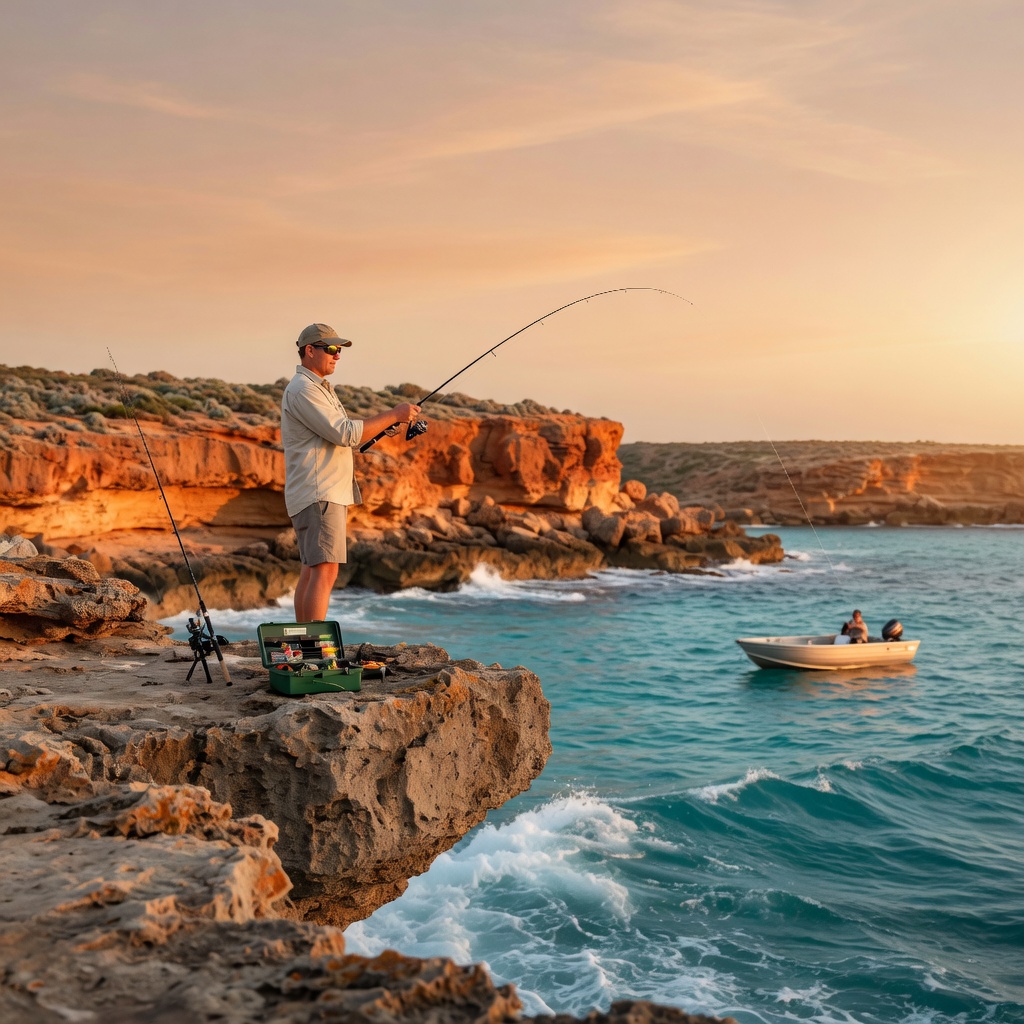
Shore-based line fishing from a beach, jetty, rock platform or riverbank does not usually require a licence in WA. Neither does fishing from a boat for species taken by hand line or rod when no licensed activity is involved — but note that the Recreational Fishing from Boat Licence applies broadly to fishing from a powered boat, so read the current rules carefully before leaving the ramp. Children under the qualifying age are typically exempt from some licence categories, and holders of certain concession cards may be eligible for reduced arrangements. Exemptions never remove your responsibility for catch limits and protected species rules.
Bag limits, size limits and possession
WA is divided into bioregions — the North Coast, Gascoyne Coast, West Coast and South Coast — and bag limits vary between them. Common concepts to understand:
- Daily bag limit: the maximum number of a species, or species group, you may take in one day.
- Mixed species limit: a combined cap that applies across a group such as demersal scalefish.
- Possession limit: the maximum quantity you may have anywhere, including at home or in a freezer, usually expressed as a multiple of the daily limit.
- Legal minimum length: measured from the tip of the snout to the tip of the tail unless stated otherwise. Undersize fish must be returned to the water immediately.
Measure fish before you place them in an esky, carry a rigid ruler or brag mat, and release borderline fish rather than risk a breach.
Seasonal closures and protected species
The West Coast Bioregion has an annual demersal scalefish closure covering popular species such as dhufish, pink snapper and baldchin groper. Pink snapper spawning closures apply in Shark Bay's inner gulfs, and marron season in the south-west runs for a short summer window with strict gear rules. Grey nurse sharks, whale sharks, sawfish, potato cod, some wrasse and all marine mammals are fully protected and must not be targeted or retained. If a protected animal is hooked accidentally, release it in the water where possible with minimal handling.
Marine parks and sanctuary zones
WA hosts extensive state and Commonwealth marine parks, including Ningaloo, Rowley Shoals, Shark Bay, Jurien Bay and Ngari Capes. Zoning matters: sanctuary zones are no-take, special purpose zones may allow limited activity, and general use zones usually permit normal recreational fishing. Boundaries are defined by coordinates, so load current zone maps into your GPS or plotter before departure rather than relying on landmarks.
Practical compliance checklist
- Confirm which licence categories your trip requires and carry proof of them.
- Check the bioregion rules for the exact stretch of coast or river you will fish.
- Verify open and closed seasons for your target species on the day you travel.
- Check marine park zoning and any local closures or restricted areas.
- Carry a release weight for demersal fishing and use it to help fish recover from barotrauma.
- Keep fish whole, or with enough intact for identification and measurement, until you reach your accommodation.
Getting reliable, current information
Regulations in Western Australia change with stock assessments and seasonal reviews, so treat printed guides as a starting point and always confirm the latest position with DPIRD before you fish. Fishing Licence Australia maintains plain-English summaries of licensing and catch rules for every Australian jurisdiction, written for anglers travelling interstate from Sydney and elsewhere. If a rule appears unclear or you have spotted an update we should reflect, contact our team at [email protected] or +61250701250 during Mon–Fri: 09:00 – 17:00 (AEST) and we will point you to the relevant official source.
Navigation
See also
FAQ