Tasmania Fishing Licence and Inland Fisheries Permit Guide
Two Separate Systems: Inland and Marine
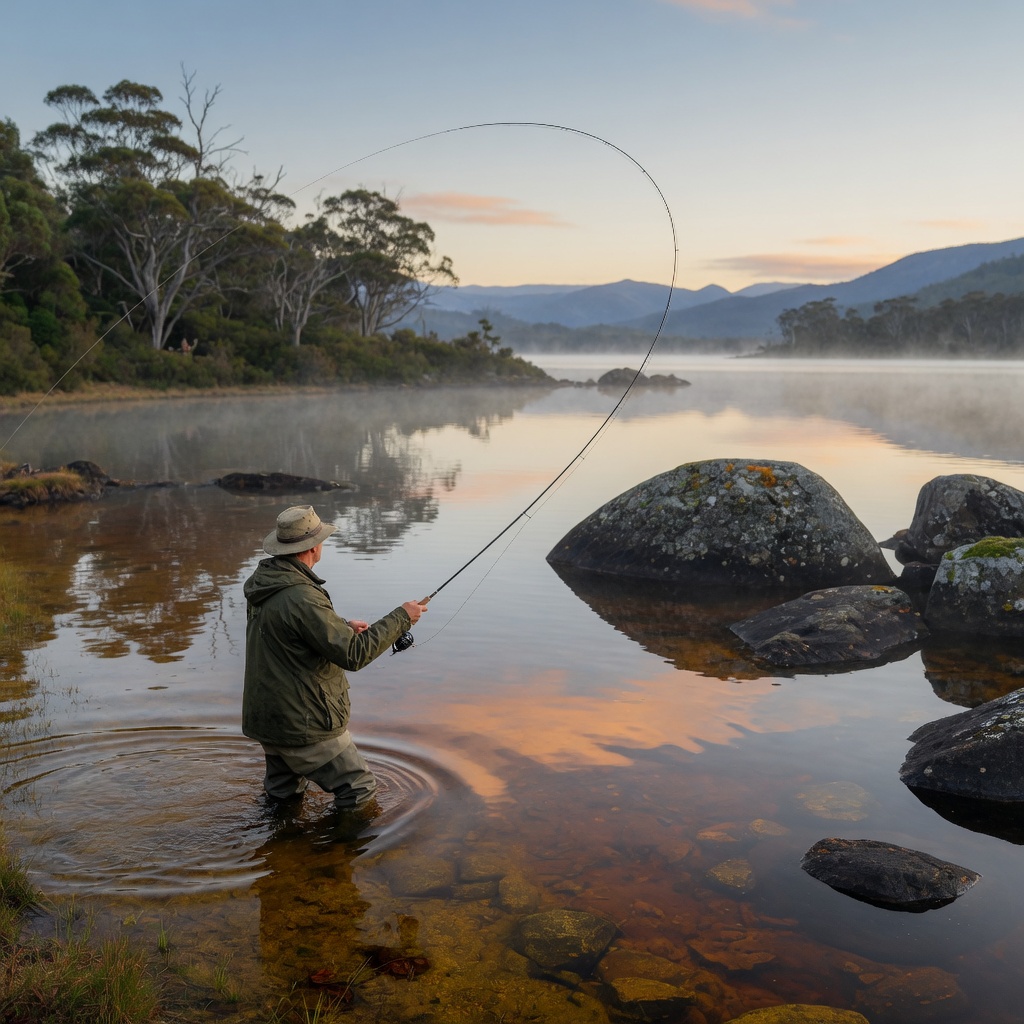
Tasmania is unusual among Australian states because it runs two distinct licensing streams. Freshwater angling in rivers, lakes and impoundments is administered by the Inland Fisheries Service, which issues angling licences for trout and other freshwater species. Saltwater recreational fishing is managed under marine and coastal fisheries rules, where a general licence is not required for a rod and line, but separate gear licences apply to activities such as taking rock lobster, abalone, scallops, and to the use of set lines, gillnets, graball nets and beach seines.
Anglers travelling from Sydney or interstate should work out which stream applies before packing gear. A Central Highlands trout trip and a Tasman Peninsula rock lobster dive require completely different paperwork, and holding one does not cover the other.
Inland Angling Licences
An inland angling licence is required to fish for freshwater species in Tasmanian public waters. Licences are issued in several durations, including full season, short-term periods and single-day options, with concession categories available for eligible pensioners and juniors. Endorsements can be added for specialised methods, and some premium waters carry additional conditions such as fly-only rules, bait bans or restricted daily quotas.
Key points to check when buying:
- The licence season generally opens in spring and closes in autumn, with variations for individual lakes and rivers.
- Carry your licence, in printed or digital form, whenever you are fishing or transporting freshwater catch.
- Licences are personal and cannot be shared or transferred between anglers.
- Some waters are managed as year-round fisheries, while others have strict opening and closing dates.
Licence Exemptions and Who Does Not Need One
Exemptions exist, but they are narrower than many visitors assume. Common exemption situations include children under the specified age fishing in inland waters, angling in licensed private waters or commercial fee-fishing ponds, and general recreational rod-and-line fishing in Tasmanian marine waters. Exemptions never remove the obligation to obey bag limits, size limits, protected species rules and closed area boundaries.
Where an exemption applies to a young angler, an adult supervising them may still need their own licence if they cast a line, bait a hook for their own catch, or use additional rods. Treat exemptions as narrow allowances rather than blanket permission.
Bag Limits, Size Limits and Seasonal Closures
Tasmanian limits vary by species, water body and season. Brown and rainbow trout have daily bag limits and minimum size limits that differ between waters, while marine species such as flathead, bream, striped trumpeter, rock lobster and abalone each carry their own possession limits and legal lengths. Female rock lobsters are protected during breeding periods, and scallop and lobster seasons open and close on set dates each year.
Practical habits that keep you compliant:
- Check the current season rules for the specific water before you travel, not just the state-wide summary.
- Carry a measuring device and measure every borderline fish before it goes in the esky.
- Count your catch against both daily bag limits and total possession limits, including fish stored at accommodation.
- Release protected species, undersize fish and egg-bearing crustaceans quickly and with minimal handling.
Marine Reserves, Fishing Zones and Gear Rules
Tasmania includes marine reserves and no-take zones where all fishing is prohibited, plus partially protected areas that restrict specific methods. Inland waters may also have exclusion zones near dams, fish ladders, hatcheries and water supply infrastructure. Gillnets and set lines carry strict labelling, attendance, soak time and depth requirements designed to reduce bycatch of seabirds and non-target species.
Mark reserve boundaries on your chart or GPS before launching, and keep gear tags legible with your name and licence details as required by the relevant rules.
Before You Fish: A Short Checklist
- Buy the correct inland angling licence or marine gear licence for your planned activity.
- Confirm season dates, bag limits and legal sizes for each target species.
- Identify closures, reserves and restricted-method waters on your route.
- Store catch so it can be counted and measured on request by a fisheries officer.
- Keep a record of where and when your catch was taken if you are moving between waters.
Fishing Licence Australia publishes plain-language summaries of state and territory fishing rules to help anglers plan trips with confidence. Rules change between seasons, so always confirm current requirements with the official Tasmanian fisheries and inland fisheries authorities before you fish. Questions about this guide can be sent to [email protected] or +61250701250 during Mon–Fri: 09:00 – 17:00 (AEST).
Navigation
See also
FAQ