South Australia Recreational Fishing Regulations Explained
Does South Australia Require a Recreational Fishing Licence?
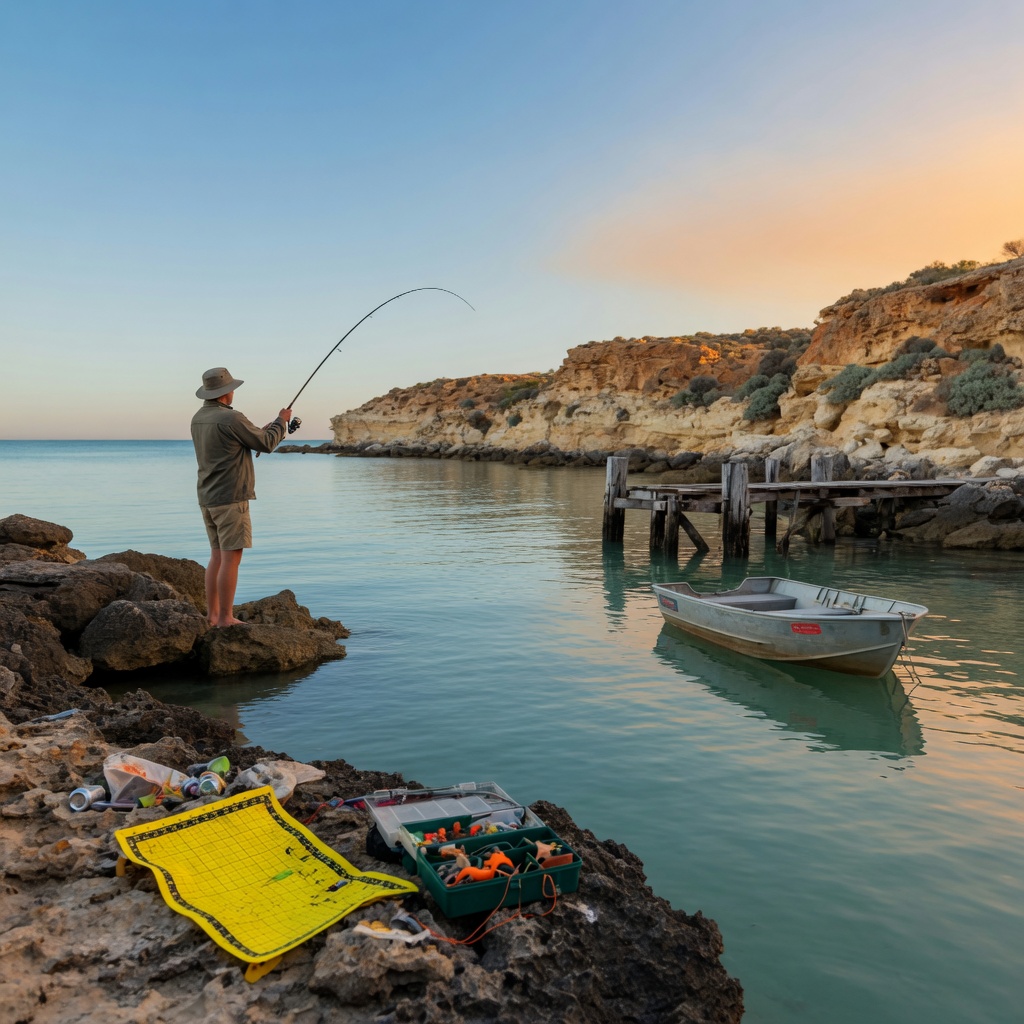
South Australia is the state most often misunderstood by visiting anglers. Unlike New South Wales, Victoria or Western Australia, South Australia does not issue a general recreational fishing licence for line fishing in fresh or salt water. That does not mean fishing is unregulated. Every angler is still bound by bag limits, boat limits, legal minimum and maximum sizes, gear restrictions, closed seasons and spatial closures such as marine park sanctuary zones. The absence of a licence fee simply shifts the responsibility onto you to know the rules before you wet a line.
Anglers travelling from Sydney frequently assume their interstate licence transfers, or that no licence means no rules. Both assumptions lead to fines. Fishing Licence Australia recommends treating South Australia as a "no licence, full compliance" jurisdiction and checking the current PIRSA Fisheries recreational fishing guide, which is the official source for limits and closures.
Registrations and Permits That Still Apply
While there is no general angling licence, some activities in South Australia do require registration, a permit or a device tag. These commonly include:
- Rock lobster pots and drop nets — devices must be registered and tagged to the user, with limits on how many you may set.
- Certain nets and traps — hoop nets, yabby traps and mesh nets are subject to design, marking and area restrictions, and some are prohibited outright in specific waters.
- Non-recreational or organised activity — competitions, research collection and any take beyond personal use can require separate approval.
- Charter and guided fishing — operators work under commercial authorisations; as a paying passenger you are still bound by recreational limits.
Registration requirements change, so verify device rules for the exact season and waterbody. Devices that are unmarked, unattended too long, or set in closed areas can be confiscated even if the catch itself is legal.
Bag Limits, Boat Limits and Size Limits
South Australia applies both a personal daily bag limit and, for many species, a boat limit that caps the total held on a vessel regardless of how many anglers are aboard. Popular species such as King George whiting, snapper, garfish, squid, blue crabs and Murray cod each have their own limits and legal lengths, and some have both minimum and maximum sizes to protect large breeding fish.
Practical compliance tips:
- Carry a rigid measuring device and measure fish immediately, not at the cleaning table.
- Measure from the tip of the snout to the tail as specified for that species, and note that crabs and lobsters use carapace measurements.
- Keep fish whole or in a form that allows size to be verified until you are away from the water.
- Return undersized and excess fish to the water quickly, using wet hands and minimal handling.
Seasonal Closures and Spatial Rules
Closures are a central tool in South Australian fisheries management. Snapper closures have applied across gulf and shelf waters in recent years, and freshwater species can be protected during spawning periods. Marine parks add a second layer: sanctuary zones generally prohibit all fishing, while habitat protection and general use zones allow some activities. Aquatic reserves, jetty rules and river-specific closures may also apply.
Before every trip, confirm three things: whether the species is open, whether the location sits inside a no-take zone, and whether your intended gear is permitted there. Marine park boundaries are best checked against the official mapping tools rather than memory or local hearsay. Our overview of state-by-state fishing rules can help you compare South Australian arrangements with the licensing systems used elsewhere in Australia.
Protected and Restricted Species
Some species must be released immediately or must never be targeted. These include listed sharks such as the great white, sawfish, seahorses and pipefish, certain freshwater fish, and the giant Australian cuttlefish in defined northern Spencer Gulf waters. Total protection means no take and no possession, including for bait. If you cannot confidently identify a fish, release it.
Reducing Your Risk of an Infringement
Fisheries officers can inspect catch, gear, eskies and vessels. The most common offences are undersized fish, exceeding bag or boat limits, unmarked devices and fishing in sanctuary zones. Keep a written or photographed copy of the current rules with you, separate your catch from other anglers' catch where practical, and stop fishing for a species once you reach the limit — continuing to catch and release a filled species can still attract scrutiny in some circumstances.
Fishing Licence Australia publishes plain-language summaries only. For binding requirements, penalties and the latest closure notices, always consult official South Australian fisheries publications and current legislation. Questions about this guide can be sent to [email protected] or raised by phone on +61250701250 during Mon–Fri: 09:00 – 17:00 (AEST).
Navigation
See also
FAQ