Queensland Bag and Size Limits for Popular Saltwater Fish
Why Queensland Limits Matter Before You Cast
Queensland does not require a general recreational fishing licence for most saltwater and freshwater fishing, which surprises many anglers travelling north from Sydney. What Queensland does have is a detailed set of bag limits, possession limits, legal size limits and closed seasons that apply to everyone, resident or visitor, on a charter boat or off a jetty. Compliance is measured by what is in your esky, not by what is in your wallet, so the numbers below matter more than paperwork.
Two ideas are often confused. A bag limit is the maximum number of a species you may take in one day. A possession limit is the maximum number you may have in your possession at any one time, including fish stored at a camp site, in a freezer on a boat, or in transit. Stockpiling several days of catch usually breaches possession rules even if each individual day was within the bag limit.
Popular Saltwater Species: What to Check
The species below are the ones most often targeted along the Queensland coast. Figures are reviewed by fisheries managers and have changed several times in recent years, so treat this as an orientation list and confirm current numbers before you fish.
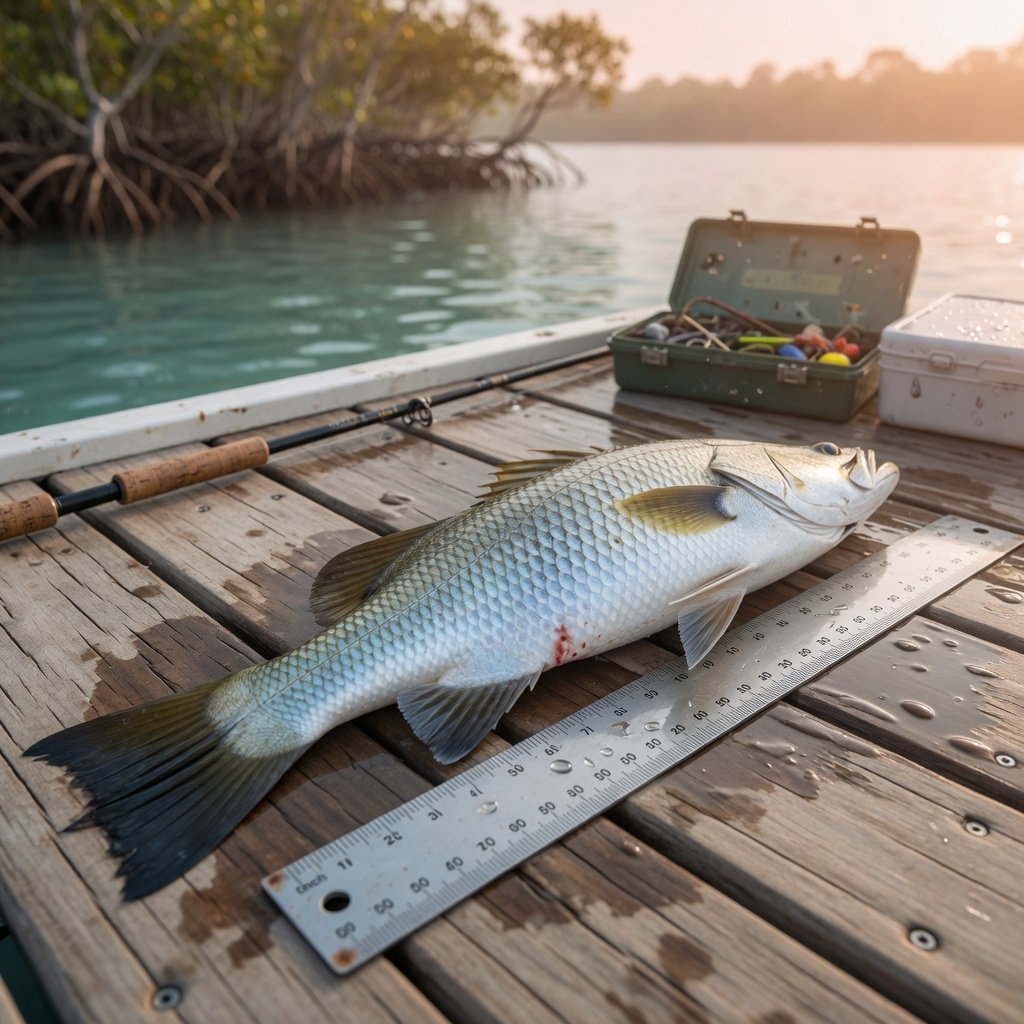
- Barramundi — a minimum and a maximum legal length apply, so very large trophy fish must be released. A closed season protects spawning fish over the summer months, with different dates for the east coast and the Gulf of Carpentaria.
- Coral trout, red emperor and other coral reef fin fish — individual minimum sizes apply per species, plus an overall combined limit across the coral reef fin fish group. Short annual reef closures around the October and November new moon periods also apply.
- Snapper and pearl perch — minimum sizes apply, along with a seasonal closure in the winter months on the east coast and a restriction on how many larger snapper you may keep.
- Spanish mackerel — a minimum length applies and the east coast bag limit has been reduced significantly to support stock rebuilding. This is one of the most important figures to re-check each season.
- Dusky flathead — both a minimum and maximum length apply, protecting large breeding females.
- Bream, whiting and estuary staples — minimum lengths apply per species, with a combined limit across the group rather than a separate quota for each.
- Mud crabs and sand crabs — males only for mud crabs, with a minimum carapace measurement, apparatus limits, and rules against taking crabs with eggs or removing claws from live crabs.
Measuring Fish and Crabs Correctly
Most Queensland fin fish are measured as total length, from the tip of the snout to the tip of the tail. Some species use fork length, and crabs are measured across the carapace. Carry a proper brag mat or ruler; a rough guess against a rod butt is not a defence. Fish must generally be kept in a form that allows measurement and identification until you reach your home or accommodation, which means filleting at sea is restricted for many species.
Protected and No-Take Species
Some species cannot be taken at all. Queensland's no-take list includes species such as potato cod, Queensland groper, humphead Maori wrasse, some sawfish and sharks, and all marine turtles and mammals. Learn to identify these before you fish reef or estuary systems, because a genuine mistake still counts as an offence. If in doubt, release the fish quickly and unharmed in the water.
Marine Parks and Zoning
Bag and size limits are only one layer. On top of them sit zoning rules in the Great Barrier Reef Marine Park, Moreton Bay Marine Park and other declared areas. Green (marine national park) zones prohibit all fishing and collecting, while other zones limit gear or line numbers. Always cross-check your GPS position against a current zoning map, since limits and closures can differ within a few hundred metres.
Practical Habits That Keep You Legal
- Download the official Queensland fisheries app or rules summary and refresh it at the start of every trip.
- Count and measure each keeper as it goes into the esky, not at the boat ramp.
- Keep species separated so combined-group limits are easy to demonstrate to an inspector.
- Note closed-season dates in your calendar, especially barramundi, snapper, pearl perch and the reef closures.
- Remember that limits apply per person, not per boat, and that fish taken for someone else still count against your own limits.
Interstate Anglers: A Quick Warning
If you normally fish in New South Wales or Victoria, do not assume the numbers travel with you. Licence requirements, minimum lengths, bag limits and closed seasons all differ by state, and each jurisdiction enforces its own rules. Plan each trip against the regulations of the state you are actually fishing in.
Getting Current Figures
Because limits are periodically adjusted through fisheries management decisions, Fishing Licence Australia recommends verifying every number against the official Queensland fisheries publications before you head out. This page is general guidance for recreational anglers and is not legal advice. For questions about how to use this guide, contact us at [email protected] or +61250701250 during Mon–Fri: 09:00 – 17:00 (AEST).
Navigation
See also
FAQ