How to Check Local Fishing Rules Before You Fish
Why Local Rules Matter More Than General Advice
Recreational fishing in Australia is managed state by state, and the rules can change from one bay to the next. A bag limit that applies at Botany Bay may differ from one on the Hawkesbury, and a species that is open in one state may be closed in another. Because fisheries departments update rules regularly, the safest habit is simple: check before every trip, not just once a season. This guide from Fishing Licence Australia explains how to do that quickly, using the same checks experienced anglers around Sydney run through before they load the car.
Step 1: Confirm Your Licence or Permit Status
Start with your own paperwork. In New South Wales, a recreational fishing fee applies to most saltwater and freshwater fishing, with limited exemptions. Other states and territories have different arrangements, and some require separate permits for particular activities such as rock lobster, abalone or spearfishing. Keep proof of payment or exemption with you, either on your phone or as a printed copy, because inspectors can ask for it at any time.
- Check whether your licence covers both freshwater and saltwater.
- Note the expiry date and renew before it lapses.
- Confirm whether children, pensioners or Indigenous fishers have specific arrangements in your state.
Step 2: Identify the Exact Water You Will Fish
Rules are tied to location. Write down the waterway name, the nearest boat ramp or beach access point, and whether the water is tidal or non-tidal. Estuaries often sit under saltwater rules up to a defined upstream boundary, then switch to freshwater rules above it. If you plan to move between spots during the day, treat each one as a separate rule check.
Step 3: Check Bag Limits, Size Limits and Gear Rules
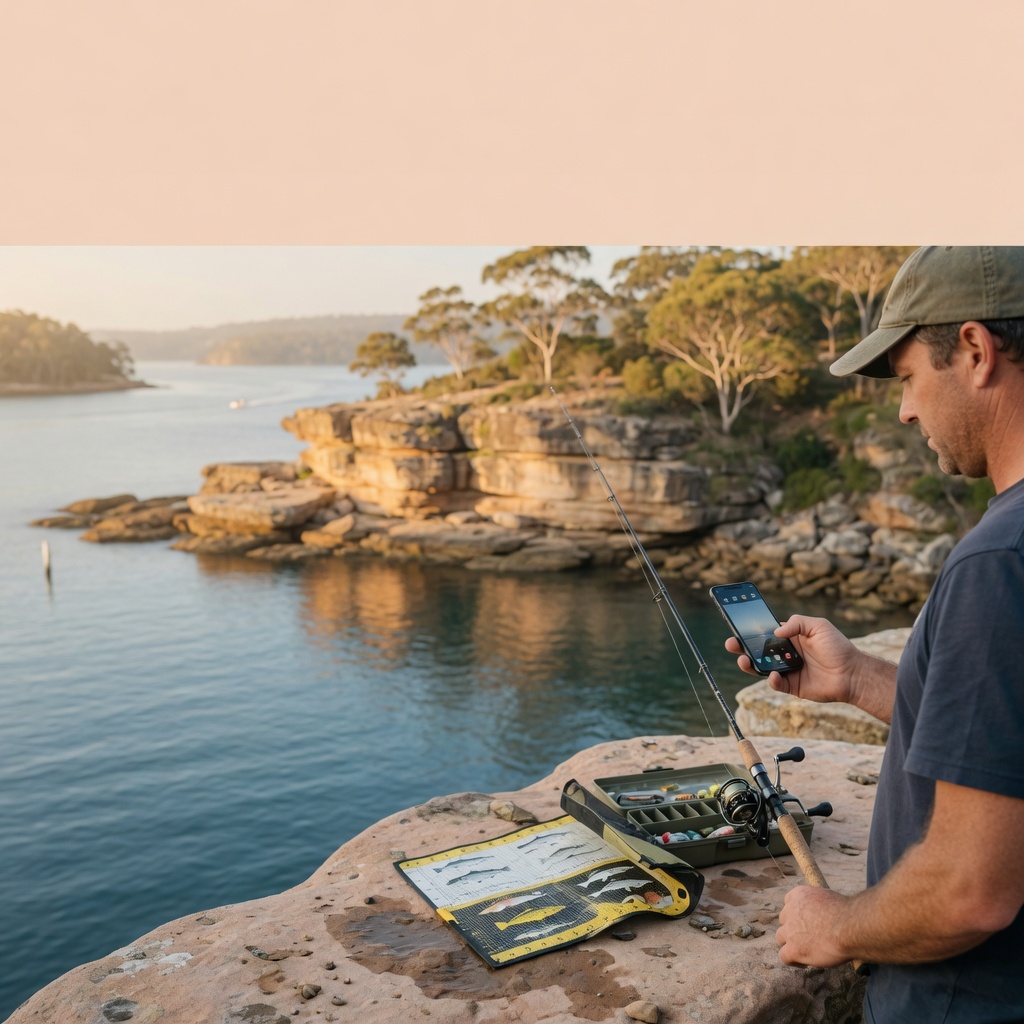
For every species you might realistically catch, look up three things: the minimum (and sometimes maximum) legal length, the daily bag limit, and any possession limit that applies when you have fish stored at home or in a camp fridge. Then check your gear. Restrictions commonly cover the number of rods, hook types, trap and net dimensions, and the use of berley or live bait. Carrying a measuring device and a rules summary in your tackle box makes on-water decisions far easier.
- Measure fish immediately, on a flat brag mat or ruler.
- Release undersized fish quickly and with wet hands.
- Stop retaining a species once you reach the limit, even if the bite is hot.
Step 4: Look for Closures, Zoning and Protected Species
Seasonal closures protect spawning fish, and spatial closures protect habitat. Marine parks and aquatic reserves are divided into zones, and some zones prohibit all fishing while others allow line fishing only. Around Sydney, intertidal protected areas also limit the collection of bait and shellfish. Separately, a list of fully protected species must always be released, including certain sharks, seahorses, grouper and freshwater species. If you cannot identify a fish confidently, release it.
Step 5: Use Official Sources, Then Double-Check
Always treat the relevant state fisheries authority as the final word. Official guides, printed rule summaries and department phone lines are the primary references; social media posts and older forum threads are not. Where two sources disagree, follow the stricter interpretation until you can confirm the current position.
- Download the current recreational fishing guide for your state.
- Note the publication date and re-check after any season change.
- Record the contact details of the local fisheries office before you travel.
Build a Pre-Trip Routine
Five minutes of checking prevents most accidental breaches. Save a short checklist on your phone: licence valid, location confirmed, species limits noted, closures checked, gear compliant. Add tide times, weather and access notes, and you have a routine that protects both you and the fishery. Questions about a specific waterway near Sydney? Contact Fishing Licence Australia on +61250701250 or at [email protected] during Mon–Fri: 09:00 – 17:00 (AEST), and we will point you to the official source that answers it.
Navigation
See also
FAQ