Fishing Compliance Inspections: What Fisheries Officers Can Check
Why Compliance Checks Happen
Recreational fishing in Australia is managed through a mix of licence requirements, bag and size limits, gear restrictions and closed areas. Those rules only work if they are enforced consistently, which is why fisheries officers patrol boat ramps, wharves, rock platforms, estuaries, dams and offshore waters. In and around Sydney, popular spots such as harbour foreshores, coastal headlands and river mouths see regular patrols, particularly during school holidays, long weekends and peak runs of popular species.
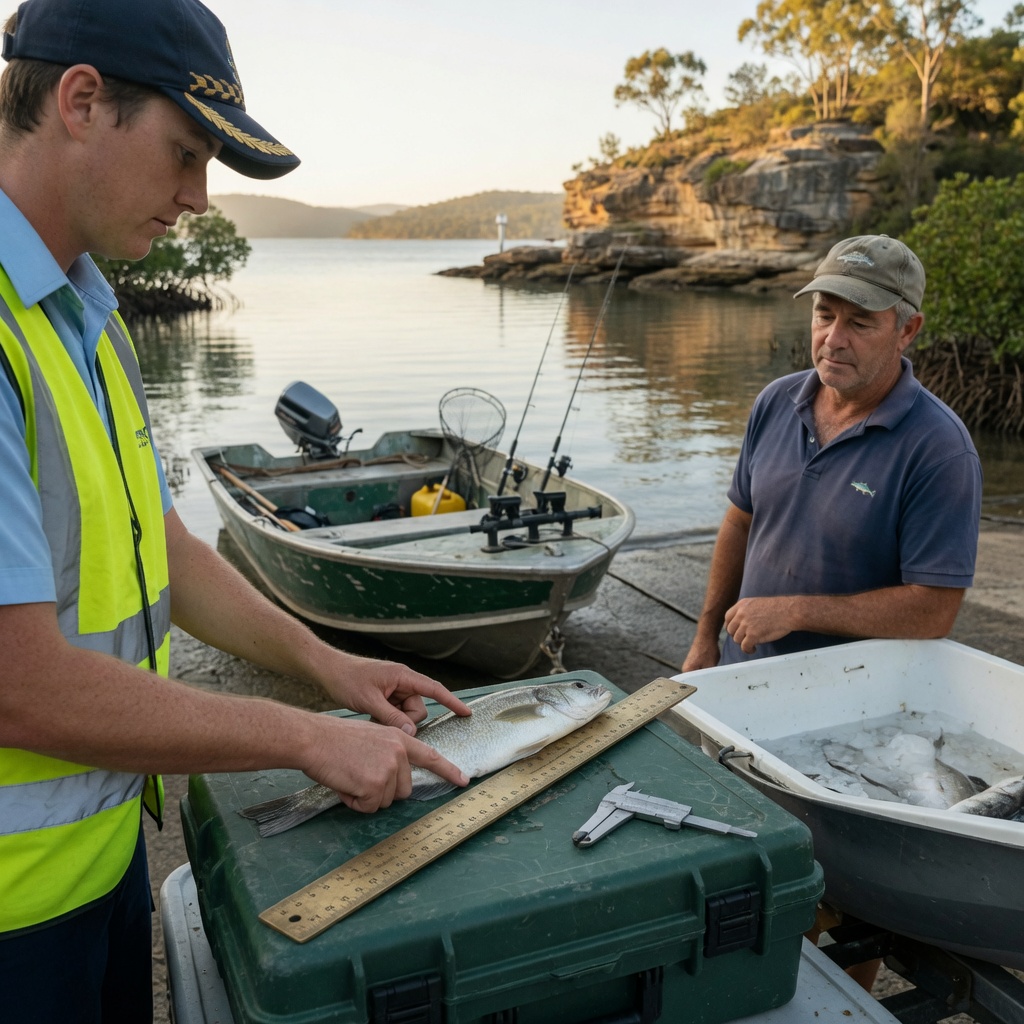
An inspection is not an accusation. Most checks are short, routine conversations that end with a reminder about a rule or a measuring demonstration. Officers also collect data on catch and effort, which feeds back into fisheries management decisions. Treating the interaction as a normal part of fishing makes it faster and simpler for everyone involved.
What an Officer Can Ask to See
Powers vary between states and territories, but across Australia authorised fisheries officers can generally require you to:
- State your name and residential address, and provide proof of identity where required.
- Produce your recreational fishing licence, fee receipt or evidence of an exemption.
- Show all fish in your possession, including fish in eskies, keeper nets, buckets, live wells and vehicle storage.
- Present fishing gear, including rods, lines, hooks, traps, nets, pots, spearguns and dive equipment.
- Explain where the fish were caught and how long you have been fishing.
- Allow inspection of a boat, trailer, vehicle or bag used in connection with fishing.
Officers may also measure fish, count them against bag and possession limits, check that traps and pots carry the required identification tags, and confirm that no protected or prohibited species are being retained. Refusing a lawful direction, giving false information or interfering with an inspection is usually a separate offence to the original fishing breach.
The Most Common Breaches
Enforcement patterns are fairly predictable. The breaches officers encounter most often include:
- No licence or unpaid fee where one is required for the water being fished.
- Undersize fish retained because the angler measured incorrectly or guessed.
- Exceeding bag or possession limits, including fish stored at home or in a second esky.
- Fishing in a closed area, such as a sanctuary zone in a marine park or a seasonal spawning closure.
- Illegal or unattended gear, including untagged traps, too many lines or unattended set lines.
- Retaining protected species or taking species subject to a total ban.
Penalties can include on-the-spot fines, larger court-imposed penalties for serious or repeat matters, forfeiture of gear and catch, and in some cases suspension of your fishing entitlement. Commercial-scale or repeat offending is treated far more seriously than an honest mistake.
How to Prepare Before You Fish
Compliance is easiest when you build a short routine into every trip:
- Carry your licence or receipt on your phone and, where possible, a backup copy.
- Pack a rigid measuring device or brag mat rather than relying on a rod marking.
- Check the current legal length and bag limit for each target species on the day, since rules change.
- Confirm zoning boundaries before launching, especially in marine parks with sanctuary areas.
- Keep species separated in the esky so counts are easy to demonstrate.
- Measure and release borderline fish immediately rather than deciding later.
If you fish across borders, remember that limits, closures and licence requirements are set by each jurisdiction. A fish that is legal in one state may be undersize or protected in another, so review the relevant state-by-state fishing laws before travelling.
During the Inspection
Stay where you are, keep hands visible, and secure any hooks or knives before opening containers. Be honest about what you have caught and where. If you genuinely do not know a rule, say so, because officers routinely provide education rather than penalties for first-time, low-level misunderstandings. If you disagree with a decision, note the officer's name and details and follow the formal review or court process rather than arguing at the ramp.
You are entitled to ask which rule you may have breached and what evidence has been recorded. Keep any receipt, field notice or infringement paperwork, as it will list the specific provision and the review options available to you.
Records Worth Keeping
A simple trip log recording date, location, species, sizes and numbers retained is useful if a question later arises about fish stored at home. Photographs of measured fish against a mat, with the date visible, can also help clarify honest disagreements. None of this is mandatory for recreational anglers in most areas, but it makes your position much easier to explain.
Getting Reliable Information
Rules are updated regularly, and unofficial forum advice ages quickly. Always verify limits, closures and licence conditions against current state fisheries publications before you fish, and check for temporary closures after floods, fish kills or stocking events. For an overview of the broader framework, see our guide to fishing regulations and bag limits.
Fishing Licence Australia publishes plain-language explanations of recreational fishing requirements for anglers in Sydney and across Australia. If you have a question about how a rule applies to a specific trip, contact us at [email protected] or +61250701250 during Mon–Fri: 09:00 – 17:00 (AEST) and we will point you to the relevant official source.
Navigation
See also
FAQ