Crab Pot, Hoop Net and Trap Regulations by State
Why Trap Rules Differ So Much Between States
Crabbing and yabbying gear is one of the most heavily regulated areas of recreational fishing in Australia. Each state and territory writes its own fisheries rules, so a hoop net that is perfectly legal in one waterway may be prohibited a few hundred kilometres away across a border. Differences exist because of local species, bycatch risk, entanglement risk to protected animals such as turtles and platypus, and historical pressure on estuary stocks.
If you fish out of Sydney and then travel interstate for a holiday, assume nothing carries over. Check the gear type, the number of units allowed per person, the labelling requirements and any zone-based bans before you set a single pot. Fishing Licence Australia summarises the general shape of the rules here, but the responsible state fisheries agency always holds the final word.
Common Gear Types and What They Are Called
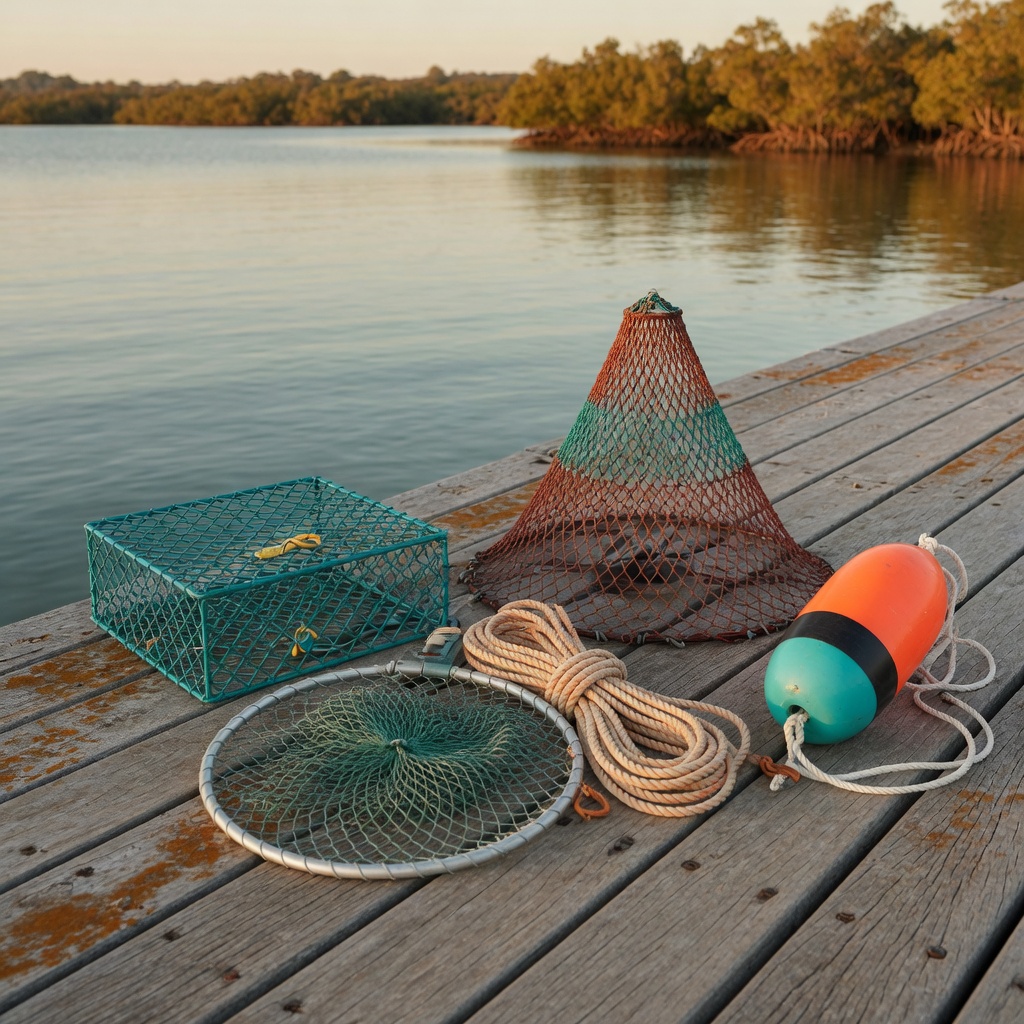
- Crab pot / crab trap – a rigid or collapsible mesh enclosure with entrance funnels, used mainly for mud crabs and blue swimmer crabs.
- Hoop net (dilly) – an open-topped ring net that crabs walk into; generally considered lower risk for bycatch because animals can escape.
- Witches hat – a conical net over a ring, restricted or banned in several jurisdictions due to entanglement concerns.
- Opera house net – an enclosed yabby trap with slot entrances, now prohibited in public waters in a number of states because of drowning risk to air-breathing wildlife.
- Open-top lift net / pyramid net – the widely accepted replacement for opera house nets in freshwater.
- Shrimp and bait traps – small mesh traps with tight limits on dimensions, entrance size and numbers.
New South Wales
NSW recreational fishers may use a limited number of hoop or lift nets and, in specified waters, crab traps. Witches hats are prohibited, and enclosed yabby traps are banned in all public inland waters. Every piece of trapping gear must be tagged with the owner's name and the date it was set. Gear cannot be left where it obstructs navigation, and traps must be attended in some estuaries. Most fishers in NSW also need a recreational fishing fee receipt in their possession while fishing or in immediate possession of gear.
Queensland
Queensland is the main mud crab state, and its rules focus on pot numbers per person, float and tag identification, and clear marking above the waterline. Pots must be marked with the fisher's surname and address details in accordance with current requirements, and floats must be of a legal type and visible. Interfering with another person's crab pot is a serious offence. Dillies and collapsible traps are also regulated by dimension and entrance size.
Victoria, South Australia and Western Australia
Victoria bans opera house nets in all public waters and limits fishers to open-top lift nets or hoop nets, with strict gear numbers and marking rules. South Australia regulates drop nets, hoop nets and blue crab pots with separate limits for different waters, and some gulf areas have additional restrictions. Western Australia sets rules for drop nets and scoop nets, with mandatory gear tagging, and applies its own licence conditions for certain fisheries. In all three states, gear must be checked regularly so that non-target animals are released promptly.
Tasmania, Northern Territory and the ACT
Tasmania regulates rock lobster pots and rings tightly, with a separate licence for lobster gear and defined seasons. The Northern Territory allows crab pots for mud crabbing with gear limits, mandatory identification and rules about setting in tidal waters. The ACT has very limited trapping options in its freshwater systems, with enclosed traps prohibited and most fishing restricted to line methods.
Universal Good Practice for Trap Users
- Label every unit clearly and legibly before you leave home.
- Use floats that stay visible and do not create a navigation hazard in channels.
- Check pots at least daily, and more often in warm weather, to reduce mortality.
- Release undersize crabs, female crabs where protected, and all non-target species immediately.
- Never set gear inside sanctuary or no-take zones of marine parks.
- Retrieve all gear when you finish. Abandoned pots keep killing and are treated as an offence.
Bag Limits, Size Limits and Protected Crabs
Trap regulations sit alongside possession limits and minimum sizes. Mud crab and blue swimmer crab sizes are measured across the carapace, and the measuring points differ by species, so carry a proper gauge rather than guessing. Berried (egg-bearing) female crabs must be returned to the water in every jurisdiction, and several states protect all female mud crabs. Soft-shelled crabs are also protected in some waters. Count crabs in your possession, not just in the pot, and remember that limits usually apply per person with a separate boat limit in some states.
Licences, Zones and Where to Confirm the Detail
Licensing requirements vary: some states charge a general recreational fishing fee, others exempt certain age groups or apply fees only to particular fisheries. Compare the current arrangements in our state and territory licence guide before you travel, and always cross-check the specific waterway you plan to fish, because estuary-by-estuary closures are common.
Rules change between seasons and after stock assessments. Treat printed summaries as a starting point, confirm details with the official state fisheries agency, and keep a current copy of the relevant guide in your tackle box or on your phone. If you need help finding the right agency page for a particular waterway, contact Fishing Licence Australia on +61250701250 or at [email protected] during Mon–Fri: 09:00 – 17:00 (AEST).
Navigation
See also
FAQ