Bag Limits vs Possession Limits: Australian Fishing Rules Explained
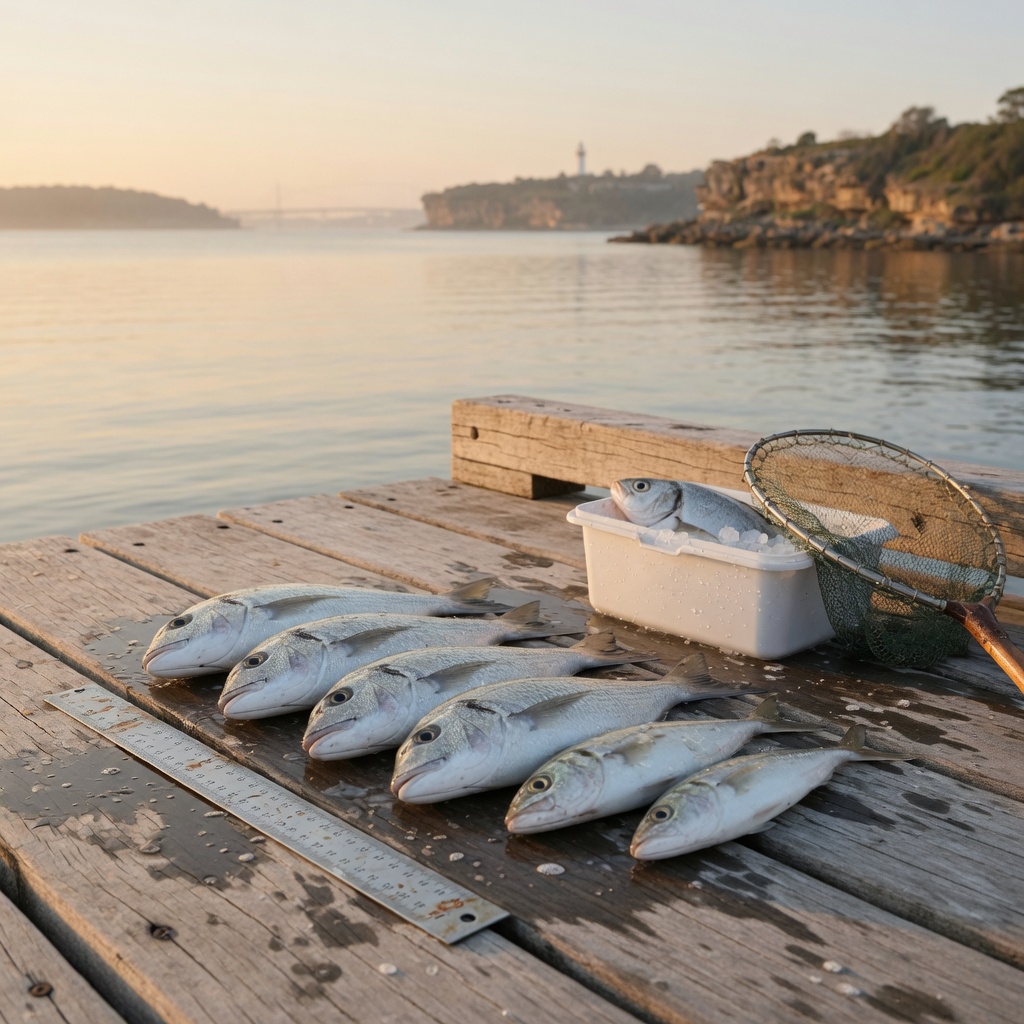
Two Different Rules That Are Easy to Confuse
Almost every recreational angler in Australia has heard of a "bag limit", but far fewer can explain how it differs from a "possession limit". The two rules work together, and breaching either one can lead to fines, gear confiscation or loss of fishing privileges. This guide from Fishing Licence Australia sets out the difference in plain terms, using examples relevant to anglers fishing in and around Sydney.
In short: a bag limit controls how many fish of a species you may take in one day, while a possession limit controls how many you may have in your keeping at any one time, including fish stored at home, in an esky, in a freezer or in a boat. A third rule, the legal size limit, controls which individual fish you may keep at all.
What a Daily Bag Limit Actually Means
A daily bag limit is the maximum number of a species (or species group) that one licensed angler may take and keep during a single day of fishing. Key points to remember:
- The limit is per person, per day — not per boat, per rod or per trip.
- Once you reach your bag limit for a species, you must stop keeping that species for the rest of the day, even if you release everything else.
- Some fisheries apply a combined limit, where several similar species share one total number (for example a mixed reef or bream-type grouping).
- Fish that are given away, filleted or eaten during the trip still count towards your bag limit for that day.
Bag limits exist to spread the catch fairly among all anglers and to keep fishing pressure sustainable, particularly on slow-growing species and on popular estuary systems close to major cities.
What a Possession Limit Means
A possession limit is a cumulative rule. It caps how many fish of a species you may hold at any moment, regardless of how many days you spent catching them. In many jurisdictions the possession limit is set at a multiple of the daily bag limit — often two days' worth — so a multi-day camping or houseboat trip does not simply allow unlimited stockpiling.
Practical consequences for anglers:
- Fish in your home freezer generally still count as being in your possession.
- Fillets are usually counted by converting them back to whole-fish equivalents, so keeping frames or clear identification is wise.
- You cannot exceed your possession limit simply because two people share one esky — inspectors will assess what each person may lawfully hold.
- Transporting fish across a state border may bring you under a second set of rules; check both jurisdictions before travelling.
Legal Size Limits: The Third Piece of the Puzzle
Even if you are well under your bag and possession limits, each individual fish must meet the legal size rules. Most species have a minimum length, allowing juveniles to breed at least once. A growing number have a maximum length or a slot limit, protecting the large, highly productive breeding fish that sustain a population.
Measure from the tip of the snout to the tip of the tail unless the local rule specifies otherwise, use a flat measuring board or brag mat, and measure before you decide to keep the fish. Undersized fish should be returned to the water quickly with wet hands, minimal air exposure and support until they swim away.
Worked Examples
- One-day estuary session: You catch and keep ten legal-size fish of a species whose daily bag limit is ten. You must release every further fish of that species, even if you plan to fish a different creek that afternoon — it is still the same day.
- Weekend trip: With a bag limit of five and a possession limit of ten, you may keep five on Saturday and five on Sunday. You may not keep fifteen and argue that the third batch is for next weekend.
- Freezer check: You already hold eight fillets equivalent to four whole fish at home. If your possession limit is ten, you may only add six more before you are over the limit.
Extra Rules That Interact With Limits
Bag and possession limits never operate in isolation. Before heading out, also check:
- Protected and no-take species — some fish must be released regardless of size or number.
- Seasonal closures — spawning closures can reduce a bag limit to zero for weeks at a time.
- Marine park zoning — sanctuary zones may prohibit all fishing, while habitat protection zones restrict methods or gear.
- Gear rules — hook, line, trap and net restrictions apply separately and are commonly enforced alongside limit checks.
- Licence requirements — recreational fishing fees and exemptions differ between states and between freshwater and saltwater fishing.
How to Stay Compliant on the Water
Good habits make compliance simple. Keep a written or phone tally of every fish retained, separate catches by angler rather than pooling them in one container, and carry a measuring device in your tackle box. When fishing with friends, agree before launching who is keeping what. If you are unsure about a species identification, release the fish — misidentification is not usually a defence.
Rules are reviewed regularly, so treat printed guides as a snapshot and confirm current numbers with your state fisheries authority before each season. For a broader overview of licences, zones and state-by-state differences, start at the Fishing Licence Australia home page.
Questions About Your Local Rules?
If you would like help interpreting the limits that apply to a particular waterway around Sydney, contact Fishing Licence Australia on +61250701250 or at [email protected] during Mon–Fri: 09:00 – 17:00 (AEST). We provide general educational information only and always encourage anglers to verify details with the official fisheries agency for their state or territory.
Navigation
See also
FAQ